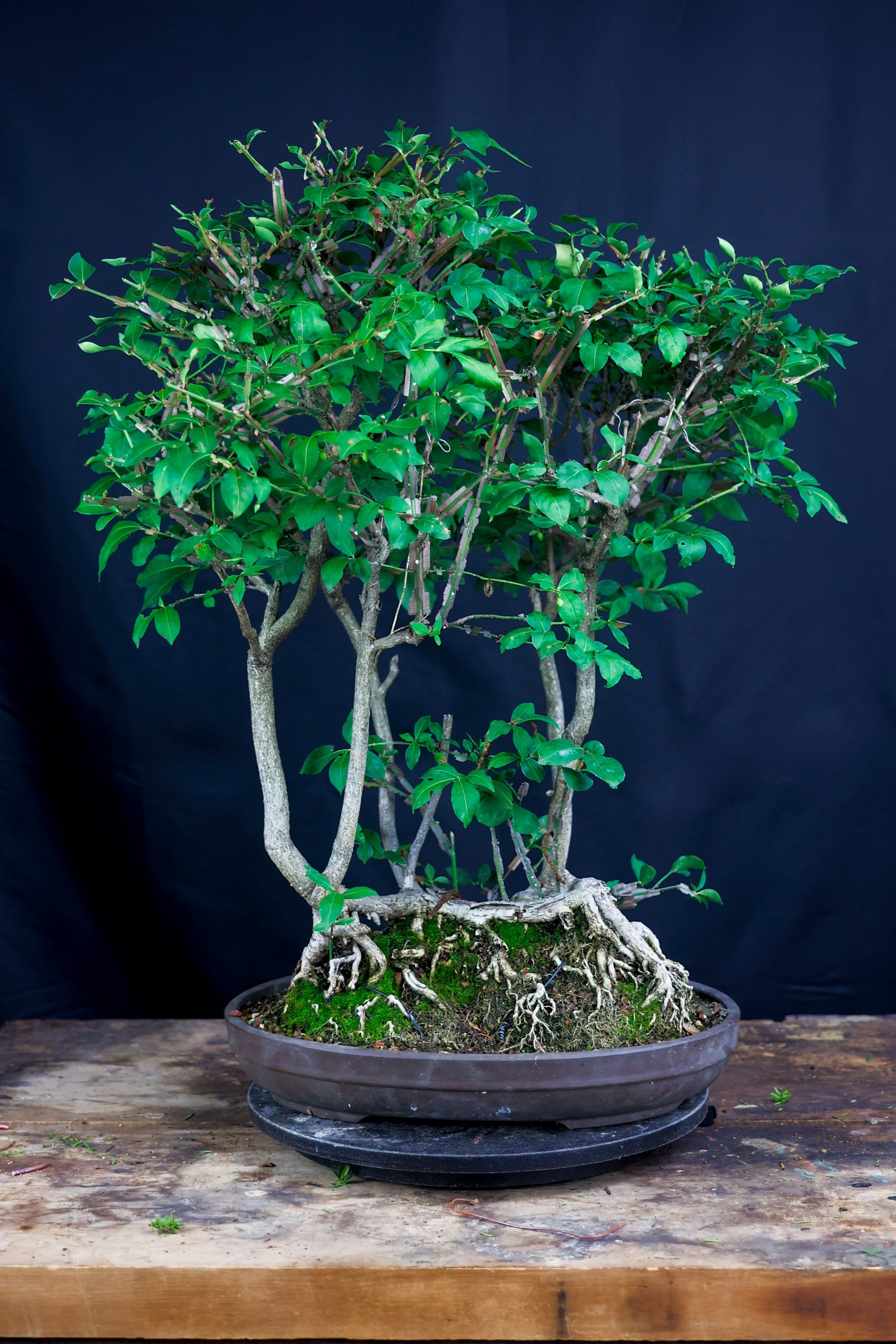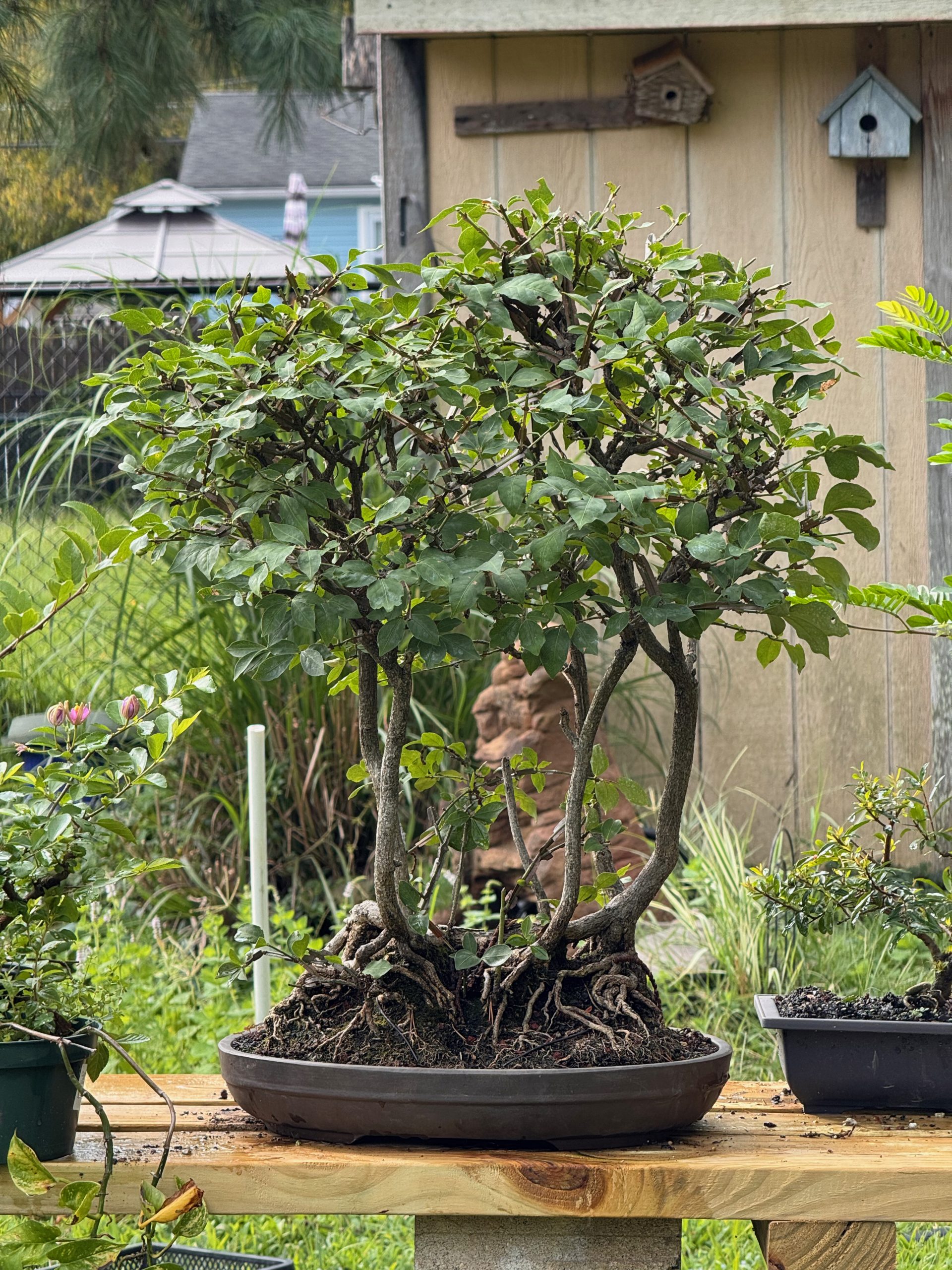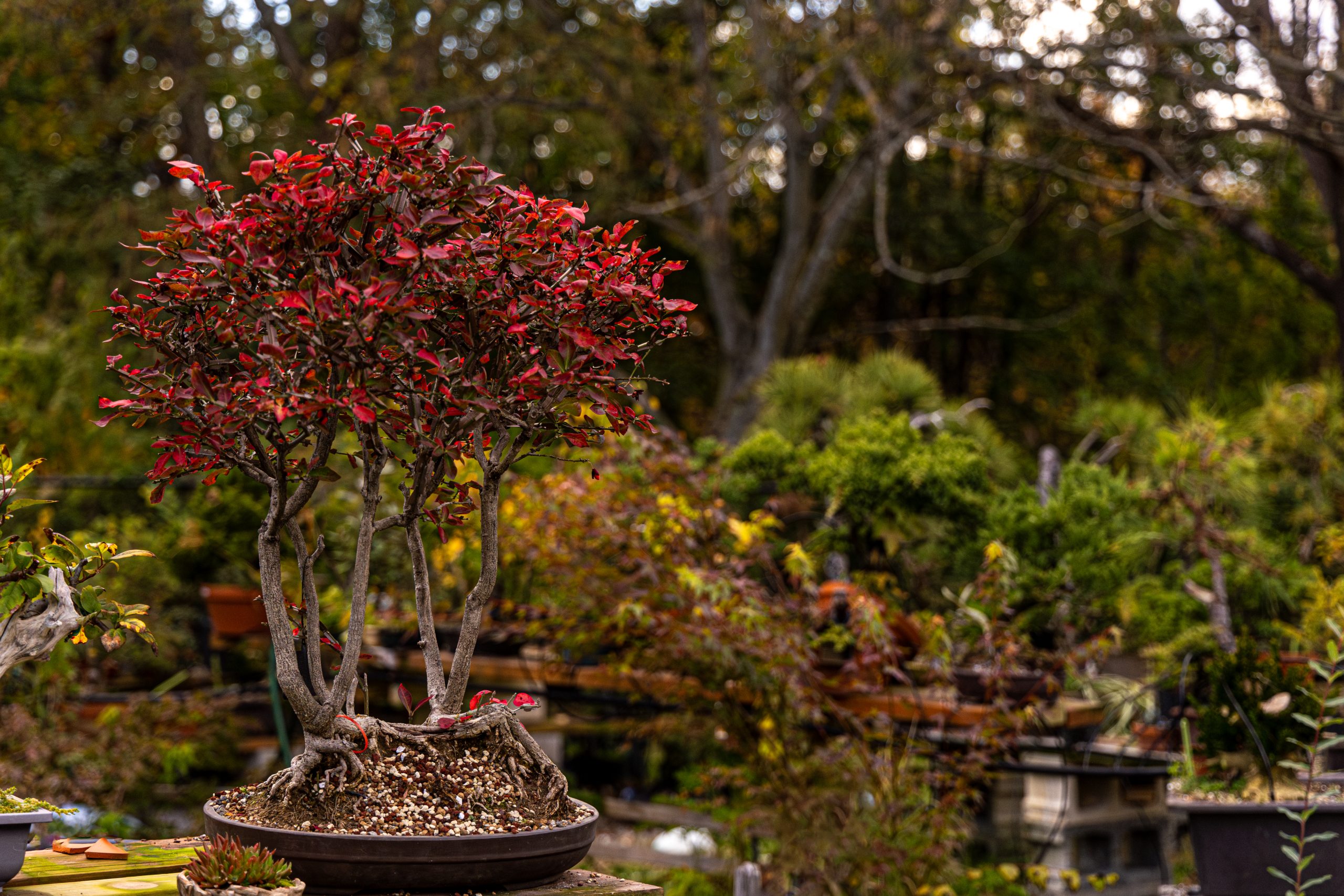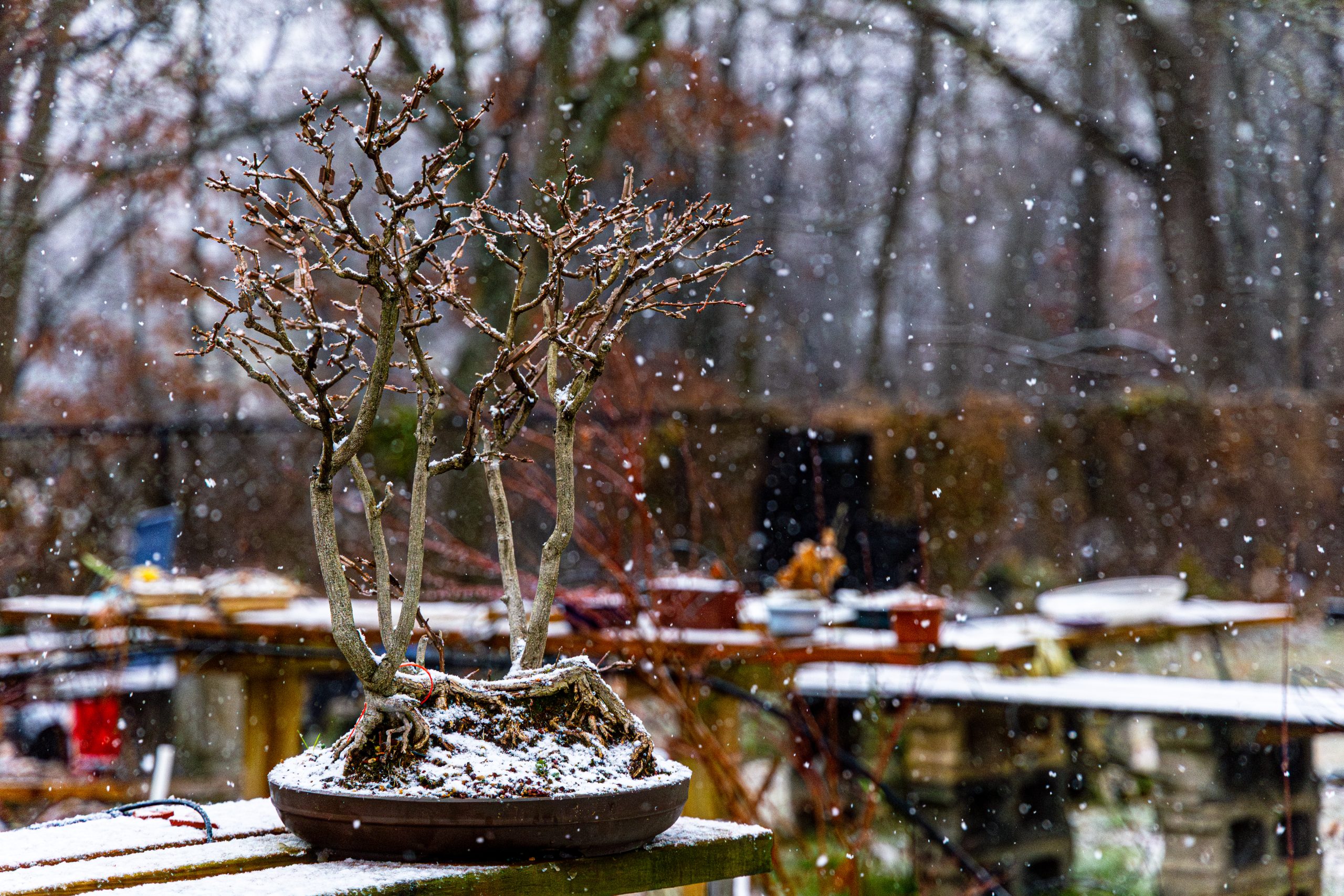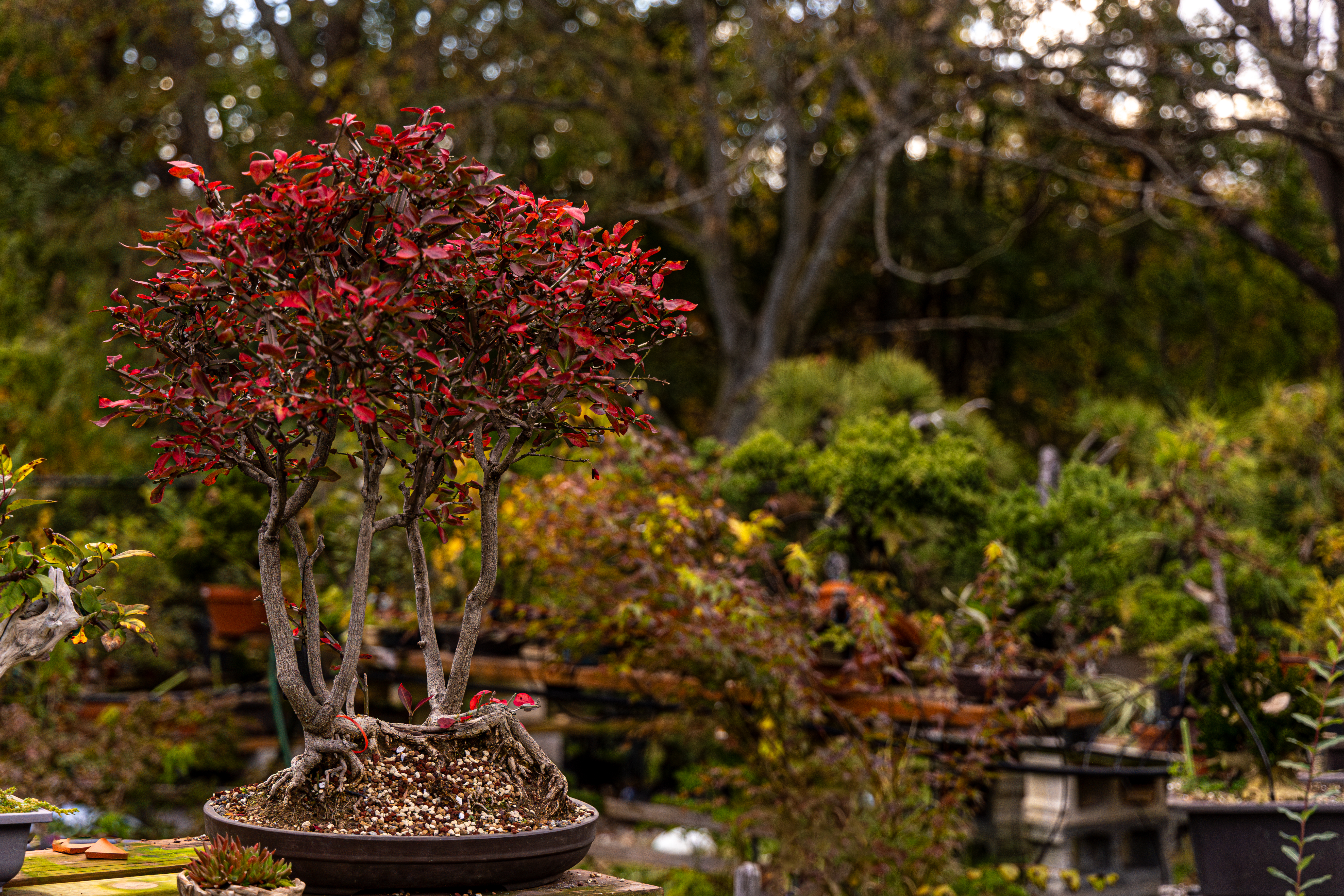
Winged Euonymus Development Over Time
Euonymus alatus, The Burning Bush in Bonsai
There are trees that whisper. And there are trees that ignite.
Euonymus alatus, commonly known as Winged Euonymus or Burning Bush, does not fade quietly into autumn. It erupts into scarlet. The transformation is so intense it almost feels artificial, like someone turned up the saturation of the season.
In bonsai, that drama is compressed into a small container, fire, structure, texture, and time, all in miniature.
Why Winged Euonymus Works for Bonsai
The defining feature of Euonymus alatus is the corky ridges that form along mature stems. These “wings” give even younger material a sense of age and rugged character. Combined with reliable back-budding and strong seasonal contrast, it becomes a compelling species for long-term development.
- Vivid red fall foliage
- Corked, winged bark texture
- Strong response to pruning
- Hardy in USDA Zones 4 to 8
- Excellent for informal upright and clump styles
Left unchecked, it grows vigorously. But under disciplined pruning, it refines beautifully.
Care Guide for Euonymus alatus Bonsai
Light
Full sun produces the strongest fall color and tighter internodes. Partial shade is tolerated, but brilliance is earned in sunlight.
Water
Evenly moist soil is ideal. In a bonsai container, avoid prolonged saturation. Strong drainage equals strong roots.
Soil
A well-draining, mostly inorganic bonsai mix promotes healthy root ramification. Heavy organic soil retains too much moisture and can reduce root vigor.
Fertilizer
Feed consistently through the growing season. A balanced fertilizer works well. Reducing nitrogen toward late summer can help intensify autumn color.
Growth Habit, One Flush Per Year
Unlike many deciduous bonsai species, Euonymus alatus produces a single strong flush of growth each year.
This matters.
In spring, the tree pushes most of its stored energy into one primary surge. Once that flush hardens off, it does not reliably produce a second wave of growth like maples or elms.
If you prune too early, while the spring extension is still developing, you are not refining. You are interrupting the only major growth cycle the tree will give you that year.
Let it run. Allow the shoots to extend fully. Let the leaves harden. Let the tree complete its spring effort.
Then prune.
This approach accomplishes three things:
- Maximizes energy capture for the year
- Strengthens the root system
- Encourages tighter back-budding after hardening
Patience in spring pays dividends in autumn.
Pruning Strategy for Winged Euonymus Bonsai
- Do not rush spring pruning. Allow the single flush to extend and harden.
- Structural pruning in late winter, before bud break.
- Post-flush pruning after spring growth fully matures.
- Maintenance trimming is more limited than multi-flush species.
- Partial defoliation can be used cautiously to reduce leaf size and increase ramification.
This species rewards restraint. It is not a tree you micromanage weekly. It is a tree you guide, then allow to speak once per season.
Single-Flush vs Multi-Flush Bonsai Species
Some species, like Chinese elm, trident maple, or many tropicals, can push multiple flushes of growth in a season. That gives you repeated opportunities to prune, build ramification, and fine-tune silhouette throughout the year.
Winged Euonymus does not usually work that way.
Because it tends to deliver one major spring flush, your timing matters more. Your strategy becomes less about constant control and more about choosing the right moment to intervene.
- Multi-flush species: refine in cycles, prune and regrow multiple times.
- Single-flush species: let the spring engine run, then prune once the growth hardens.
If you treat a single-flush tree like a multi-flush tree, you often end up with less growth, weaker response, and a full year lost. If you respect the rhythm, the tree stays strong, and refinement becomes steady year over year.
Invasiveness Note
In parts of the northeastern United States, Winged Euonymus is considered invasive due to seed spread in natural landscapes. As bonsai in containers, the risk is significantly reduced, but managing fruit responsibly is still good practice.
My Winged Euonymus Bonsai, Year by Year
Bonsai is not a before-and-after art. It is a decade-long commitment.
I purchased this Euonymus alatus in 2023 from Jim Doyle of Nature’s Way Bonsai Nursery in Harrisburg, Pennsylvania. I consider it a legacy tree. It was part of a sale that followed the death of Ron Bates, an avid bonsai practitioner in the Harrisburg area.
The proceeds of the sale went to Ron’s daughter, which made bringing this tree home feel even more meaningful. It was not just an acquisition. It was a continuation. This tree had been in Ron’s care for over 20 years before it came to me, and that history matters. You can feel it in the structure, in the calm confidence of the trunks, in the way the canopy reads like a small landscape instead of a single plant in a pot.
This tree was also displayed in a show in 2016 during Ron’s care. Seeing it presented publicly years before it came to me adds depth to its story and reinforces its legacy status.
I fell in love with the clump, almost forest-like presence immediately. Jim shared a photo of this tree from a fall show years ago, and that was it. I knew I had to have it. It is one of my favorite trees in my collection, and I look forward to being a good steward of it for the decades ahead.
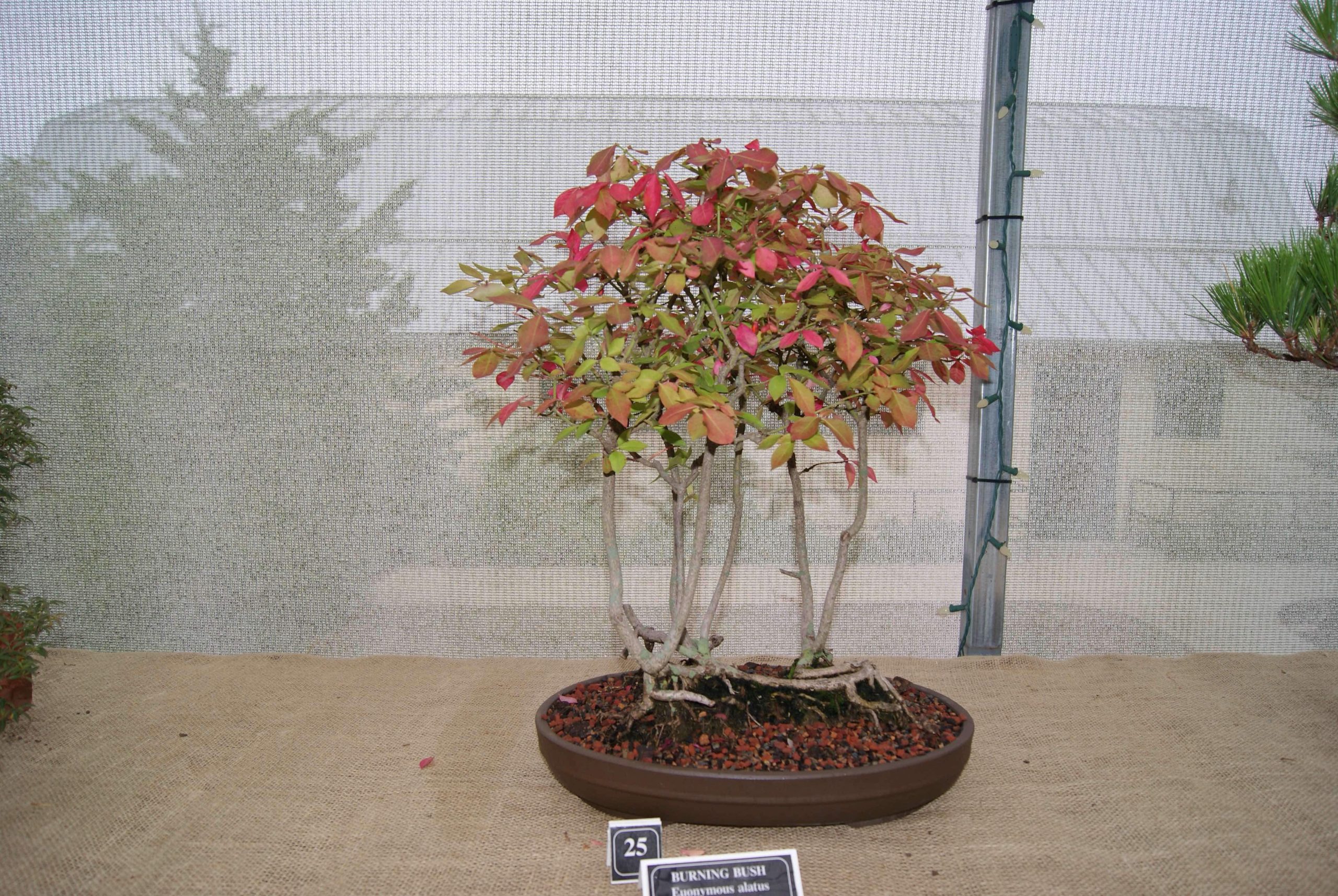
2023, Acquisition and First Observations
- Purchased from Jim Doyle at Nature’s Way Bonsai Nursery in Harrisburg
- Legacy material, previously owned and developed for over 20 years by Ron Bates
This year was about listening. Learning how it grows, how it holds energy, and how it wants to be cared for.
2024, Settling In and Gentle Direction
- Light structural decisions only, with an emphasis on maintaining the clump silhouette
- Encouraged balanced vigor across trunks and canopy
- Seasonal photos captured to establish a baseline for future comparison
2025 and Beyond, Refinement and Continuity
- Ramification development and silhouette tightening over multiple seasons
- Preserving the “mini landscape” feeling that made me love it in the first place
Every autumn is part of the record. The red arrives, the structure becomes clearer, and the tree tells you what the year meant.
Seasonal Documentation, 2025
Seasonal Study, A Tree in Four Acts
- Spring: Fresh green emergence, delicate and hopeful.
- Summer: Structural control, pruning, and tightening.
- Autumn: Scarlet ignition, the reason this species is unforgettable.
- Winter: The corked wings and silhouette take center stage.
Photographing each season tells the real story of progress. Not just branch density, but emotional weight.